
How Much Does It Cost to Develop a Website in Dubai? (2026 Pricing Guide)
More Blogs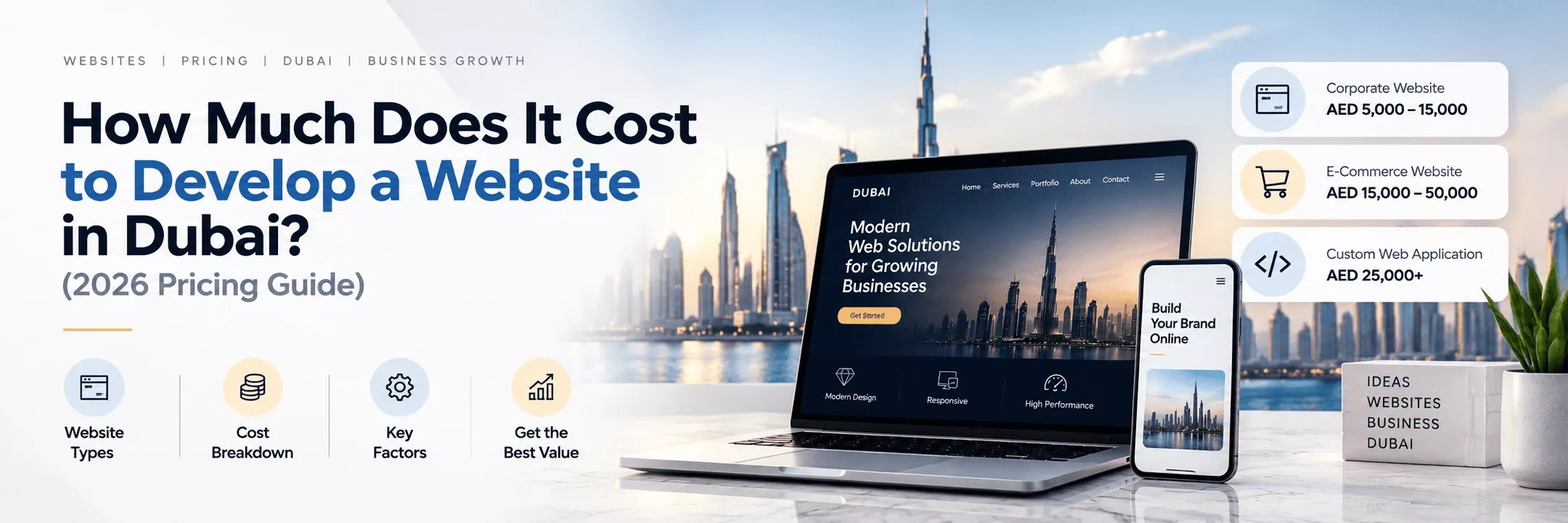
WEBSITE DEVELOPMENT COST
22/Sep/2026
Dubai is known for new ideas, business activity, and fast growth. If you are a startup in Dubai, or you are growing a company with many sites across the GCC, you need more than a nice online page. Your website becomes your primary digital identity and key source of client enquiries.
Still, many owners notice a big surprise when they ask for quotes. One team says AED 4,000, another asks for AED 25,000 plus. The difference is real, but it is not random.
This article focuses on what people pay for website work in Dubai. It also looks at why local conditions raise or lower the price. You will see how spending can change by industry, and you will get a clearer view before you start your next online build.


Website Development Cost Breakdown in Dubai
Here is a sample view of how website development pricing is often set in Dubai. The below table lists the price for website development according to type.
| Website Type | Estimated Cost Range (AED) | Best Suited For |
|---|---|---|
| Landing Page | AED 2,000 – AED 4,500 | Single-product launches, Google/Meta ad campaigns, lead generation |
| Startup Website (Basic) | AED 3,500 – AED 8,000 | New businesses needing a clean digital storefront (3–5 pages) |
| 5-Page CMS Website | AED 5,000 – AED 12,000 | Small businesses requiring text editing capabilities, a blog, and contact forms |
| Corporate Website | AED 15,000 – AED 55,000 | Established firms, multi-service companies requiring advanced UI/UX and bilingual support |
| E-Commerce Website | AED 15,000 – AED 110,000+ | Online retailers requiring product catalogues, secure checkout, and inventory workflows |
| AI/ ERP Integrated Sites | AED 50,000 – AED 200,000+ | Enterprise portals, SaaS platforms, custom web apps, and automated systems |
Why is Web Development in the UAE/GCC costlier than other regions?
Many clients ask why Dubai rates are higher than what you may see from offshore teams. There are a few local reasons that affect the bill:
- Arabic & English design needs- RTL screens
In the UAE, a professional site is made available for both Arabic and English users. Arabic support is not just swapping text. It means building a mirrored layout using RTL rules, setting the right Arabic fonts, and tuning the content for local habits. This requires additional front-end work, more checks, and longer testing time. -
Payment Gateways and Compliance in the UAE
Online shops and service websites in the UAE needs payment gateway integrations. They need direct API work with local providers such as Network International, Paymob, and Noon Pay. Many ecommerce business also add BNPL tools like Tabby and Tamara. Getting these payment paths right requires local compliance checks and security testing that are tuned to the region. -
Data Handling and Hosting Standards
UAE websites must follow tight security rules and local privacy requirements like the UAE PDPL. Website requires a reliable hosting setup. Using strong local cloud hosting plus a Middle East focused CDN can cut load times and help pages respond faster. That can support better visibility in Google rankings as well. -
Skilled People and Local Agency Support
Dubai draws experienced web designers, security specialists, and full-stack engineers from around the world. Local agencies bring a full delivery process. They handle planning, manage timelines, keep ownership of custom code, run quality checks, and support the site after launch. This level of control and reliability is hard to find with low-cost freelancers.
How Website Pricing changes by Industry in Dubai?
Each industry needs its own setup. Security steps, technical infrastructure, and UX steps can differ a lot. Because of that, the real work included in a project can shift based on your sector:
| Industry Sector | Typical Cost Range (AED) | Key Functional Drivers |
|---|---|---|
| Real Estate Website | AED 18,000 – AED 75,000+ | MLS/CRM property listings, interactive map integrations, virtual tour embeds, agent backend portals |
| School / University Website | AED 20,000 – AED 60,000+ | Student admission workflows, online fee payment gateways, course directories, LMS integration |
| Luxury Brands Website | AED 25,000 – AED 90,000+ | Immersive high-end UI/UX animations, multi-currency checkout, exclusive VIP customer membership zones |
| Marketplace / Multi-Vendor | AED 45,000 – AED 180,000+ | Independent vendor dashboards, commission split calculation logic, multi-tier user role management |
| Healthcare / Clinic Website | AED 45,000 – AED 180,000+ | Online doctor booking systems, patient record encryption, secure consultation forms, compliance standards |
Hidden Factors that affect the Final Price
Even when the page count and look are clear, other operational details can still move the budget up or down. For custom website work in Dubai, these factors often matter:
- Custom motion and UI effects: High end brands expect custom vector visuals, WebGL style animations, and smooth interactive transitions. These features requires front-end developer focused on motion work.
- Legacy data migration: For long running firms moving from an old backend to a newer setup, moving thousands of past customer accounts, database records, and old SEO blog URLs is not simple. It must be done in a safe way, with care so links do not fail.
- Third party CRM and ERP syncing: Linking a site with outside tools such as Salesforce, HubSpot, or enterprise SAP usually means building custom middleware. The goal is to keep up with steady updates so leads, inventory, and order status stay in step.
Technical Considerations: Choosing the Right Stack
If you are building a digital platform in Dubai, the tech choices affect how it grows and how much upkeep it needs:
- Custom frameworks: Custom tech stack such as Next.js, Python, React, and Node.js are good for busy corporate sites, internal portals, and custom apps. They can be tuned for strong security and quick response times.
- Open-Source CMS: Open source (WordPress or WooCommerce) are often cheaper for sites that publish a lot of content and for small shops. The site still needs good code, and safe caching.
- Enterprise Commerce: Enterprise commerce tools like Shopify Plus and Magento, also Adobe Commerce are best for large retail systems. They help with bigger product counts and heavy order traffic.
Conclusion
A website investment should be judged by what it brings in. Look at revenue, the number of leads you get, and how smoothly your work runs. Whether you want a fast corporate portal or a store with many sellers, work with a team that knows the GCC digital scene.
Check our services for options that can lift your online presence:
- Grow your brand and operational reach with our specialized custom web development services.
- Launch high-converting, secure online stores optimized for regional payment gateways through our ecommerce development services.
Disclaimer Notice:
This pricing guide and the notes here are for general purpose only. They reflect typical market pricing and common technical norms seen across digital agencies in Dubai and the UAE. Your real cost can change due to the exact features, the level of UI and UX work, how many systems need API linking, and the agency’s own overhead. If you want a specific quote or a custom plan, reach out to a qualified web development agency.
A typical site with about 5 to 10 pages often takes around 2 to 3 weeks. This timeline runs from early wireframes to the final launch. If the project is a full online store or a custom web app, the work can take about 8 to 16 weeks. The range depends on third-party API links and ERP setup.
Yes. After the first release, companies should plan for yearly domain setup such as .ae or .com. They also need secure cloud hosting, SSL certificates, and regular upkeep. Many teams use monthly care plans that include security updates, backup runs, and small content changes.
Arabic on the same site as English is strongly suggested. It is often needed for government related work, real estate services, schools, and brands that serve people in the UAE and want to match local customer expectations.